
What the game idea generator gives you
- Type a seed. A setting (“haunted library”), a character (“a nervous dragon”) or a feeling (“the panic of a shop about to close”) all work, in any language.
- Narrow it with chips, or don’t. Genre runs from Arcade and Platformer to Learning game, Audience switches between Kids, Casual and Hardcore, and Session length asks for one, five or fifteen minutes of play.
- Wait about ten seconds. Three different concepts arrive. Each lists a title, a pitch, the core loop, the controls, a twist and a build prompt of roughly 50 to 90 words naming the hero, the goal, scoring, how you lose, how difficulty rises and how the game should look.
- Keep the one you like. Copy its build prompt, or press “Build this game” to send it, prefilled, to SiGameGen.
Behind the game idea generator, a safety model screens every theme before DeepSeek V4 Flash, running on Cloudflare Workers AI, writes the pitches; a backup model steps in if it is overloaded. Nothing is stored, and one IP address can ask roughly twenty times a minute.
What makes a small game idea work
Most game ideas fail not because they are dull but because they are too big. A concept that fits into a few minutes of play has five ingredients, and the game idea generator is instructed to cover them:
- One verb. The player mainly does a single thing: jump, swap, steer, aim or stack. Everything else supports that verb.
- A core loop. The cycle that repeats every few seconds, such as dodge, collect, upgrade, repeat. If you cannot say it in one sentence, it is not a loop yet.
- A fail state. Lives, a timer, a health bar or a rising tide. Without a way to lose there is no tension and no reason for another round.
- A twist. One rule the genre normally lacks: gravity flips every ten seconds, or your score doubles as your health.
- Scope that fits. One screen or a handful of levels, a few enemy types, and a session that ends before attention does.
Difficulty belongs in the pitch as well. A line like “speed rises every ten seconds” turns a toy into a game, because players can feel themselves getting further each time.
Three game ideas that became real games
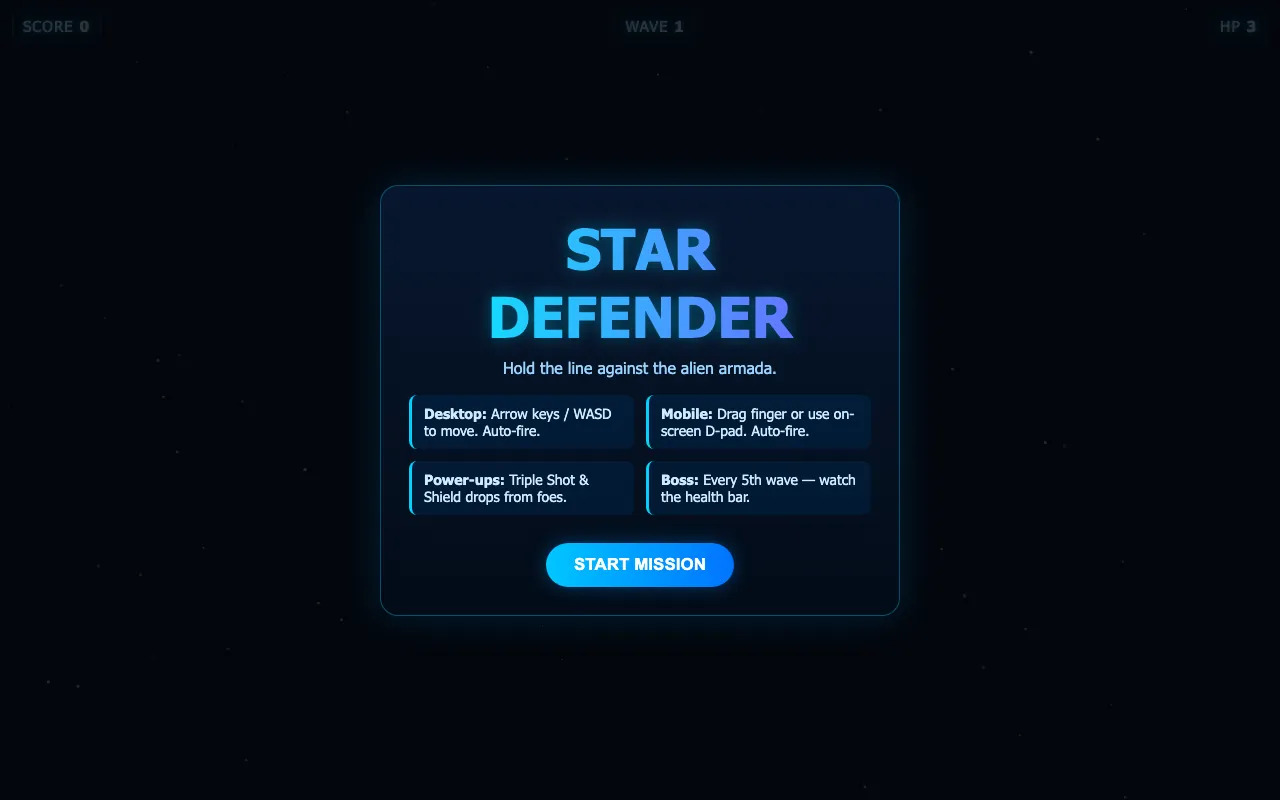
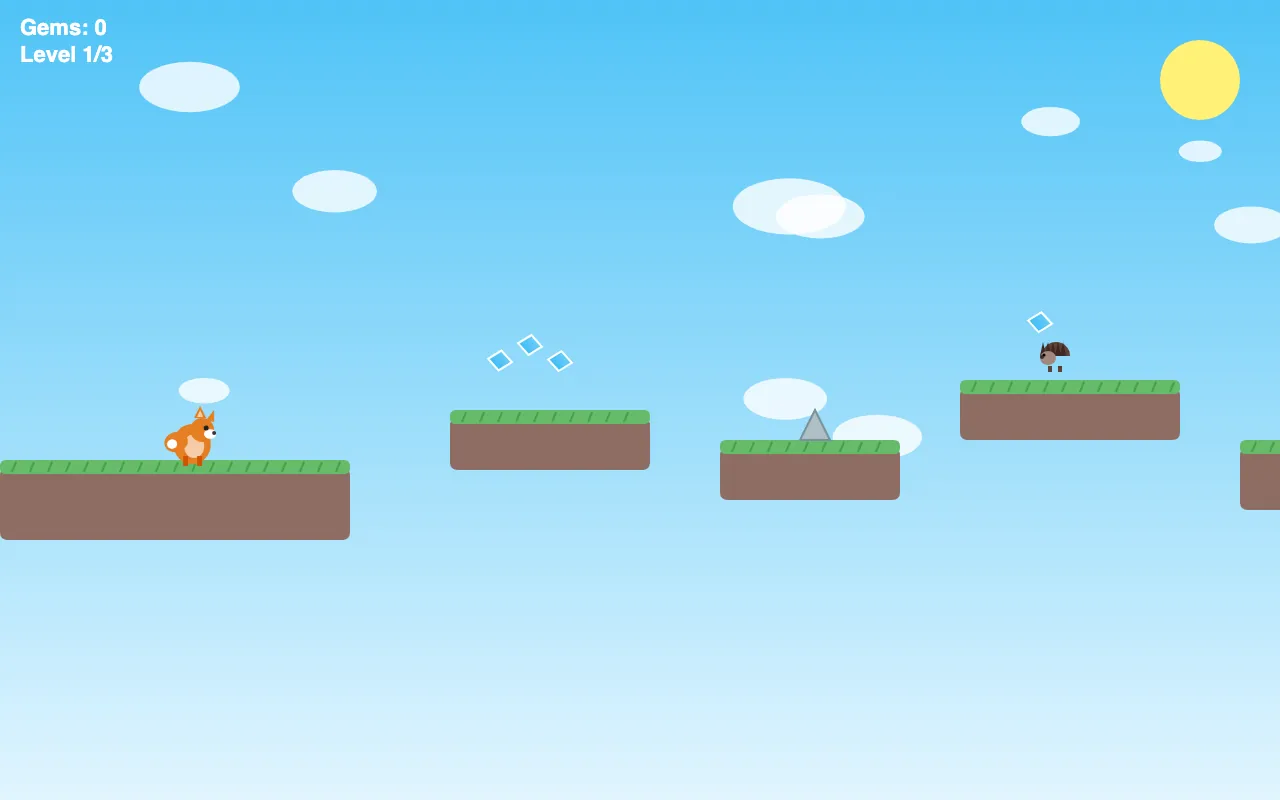
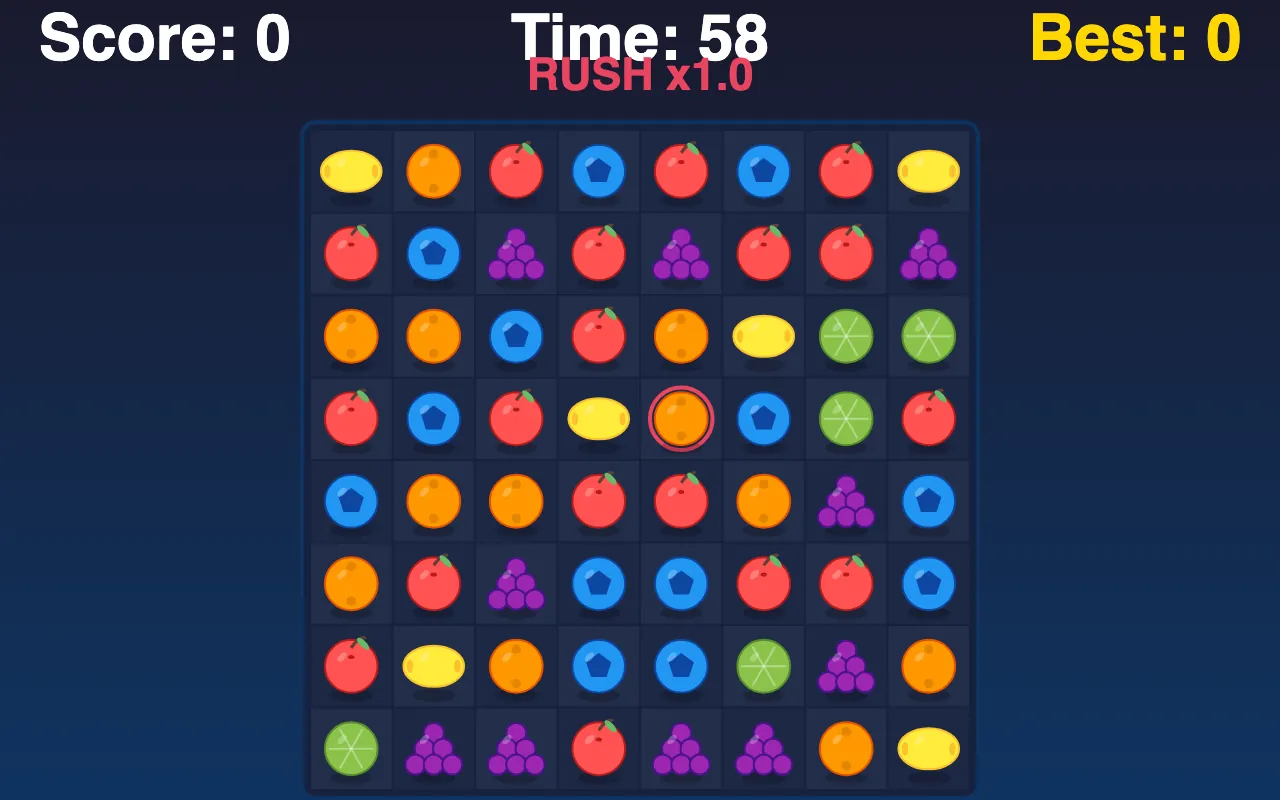
Each screenshot below shows a game built on SiGameGen, our SI game generator, on its Pro tier from the prompt printed under it, with no hand edits to the code. Read them as a guide to how much a build prompt needs, and how little.
Brainstorm game ideas with constraints
Game jams work because limits spark ideas, and you can run the game idea generator the same way:
- Start from a jam-style theme. Short, open themes such as “only one”, “roots” or “out of control” give stranger results than “fantasy RPG”.
- Add a hard limit to the theme. “A snail, one button”, “a library, no jumping” or “a volcano, all on one screen” forces a sharper loop.
- Lock one chip and vary another. Keep Puzzle as the genre and run the same theme for Kids, then for Hardcore; the gap between the answers shows where the difficulty lives.
- Mix and match. Take the loop from one pitch and the twist from another. The three results are meant to be cut apart.
- Press again. Each run returns three new concepts from the game idea generator, so ten runs give you thirty to choose from in a few minutes.
Entering a jam? Read its rules on SI-assisted work, which many people still call AI-assisted: some events welcome it, some ask you to disclose it and some ban it.
From idea to playable game in about two minutes
Every pitch from the game idea generator has a “Build this game” button that opens the create page of SiGameGen with the build prompt already filled in. Its Fast tier costs 18 credits per build and usually finishes in a minute or two, which suits arcade ideas such as runners, one-button flyers and snake variants. The Pro tier costs 89 credits, uses a code-specialised model and takes about three to seven minutes, in return for bigger, tighter games like the three above. New accounts that sign in with Google get 50 free credits, enough for two Fast builds.
Every result is a single self-contained HTML5 file. You can change it by chat, at the same price as a build on that tier, then share a link or download it; playing never costs anything. Note that the button sends only the build prompt, so if the twist you liked is missing from it, add a sentence before you build.
More free generators on this site
Need cover art or a store image for your game? The image prompt generator writes picture prompts with lighting and style worked out. Making a trailer instead? The video prompt generator plans short shots with a camera move and sound.
Game idea generator FAQ
Is the game idea generator free to use?
Completely. There is no sign-up and nothing to buy before you get pitches. A gentle per-minute limit on each connection is the only restriction, and it clears after sixty seconds.
Can I use the ideas in a commercial game?
Yes. We want no credit and set no limits on how you use them. Pitches are neither stored nor reserved, so someone else could receive a similar one, and a catchy title may already be taken; search existing games and trademarks before you launch.
Do the ideas only work with SiGameGen?
No. The pitches are engine-neutral: build them by hand in Godot, Unity, Phaser, GameMaker or Scratch, or give the build prompt to any coding assistant. The build button is simply the shortest path to something playable.
Is it suitable for kids and classrooms?
Every pitch is kept family-friendly, and the Kids audience chip together with the Learning game genre asks for simpler controls and gentler challenges, which suits coding clubs and lessons. A teacher should still read the ideas before sharing them.
Why are the game ideas so small?
Because small games get finished. Each concept is meant to be playable in minutes and buildable by one person, which also matches what a one-prompt game builder can make reliably. Pick the 15-minute session length when you want more depth.
Both free tools fall under our terms of service; what happens to a request is set out in the privacy policy. Had a pitch that broke its own rules, or want a new genre chip? Tell us at support@freesitools.com.